Specialized care for children's growing bones and joints. Our child-friendly approach ensures the best outcomes for young patients with bone, joint, and muscle conditions.
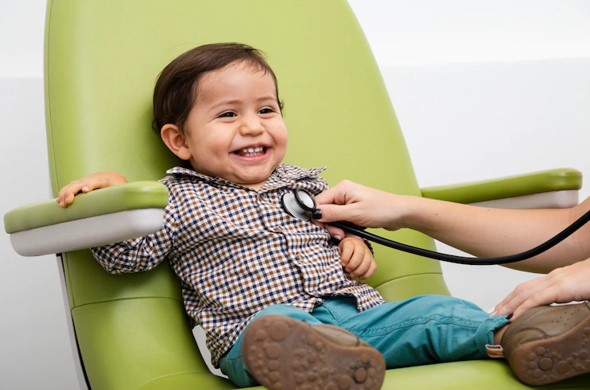
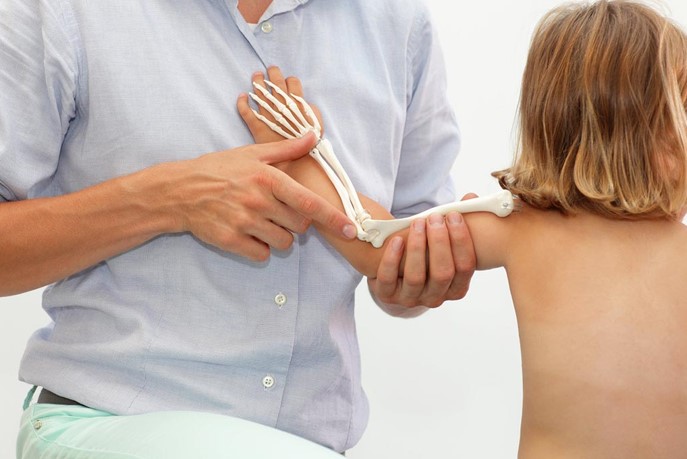
Children are not just small adults. Their growing bodies require specialized orthopedic care that considers their unique anatomy, growth patterns, and developmental needs.
Pediatric orthopedics focuses on conditions affecting children's musculoskeletal system from birth through adolescence.
Children's bones are still developing, requiring different treatment approaches than adults.
Special attention to growth plates (physis) that determine future bone growth and development.
Treatment plans account for developmental milestones and future growth potential.
Special techniques to reduce anxiety and ensure cooperation during examinations and treatments.
Expert diagnosis and treatment for children's bone and joint conditions
A congenital foot deformity where the foot is twisted inward and downward. Treatment usually begins soon after birth with casting and bracing.
Birth - 6 monthsAbnormal development of the hip joint where the ball and socket don't fit properly. Early detection and treatment are crucial for normal development.
Birth - 2 yearsAbnormal lateral curvature of the spine. Can be congenital or develop during growth spurts in adolescence.
10-18 yearsOne limb is shorter than the other. Can be congenital or acquired through injury or infection affecting growth plates.
All agesSyndactyly (webbed fingers/toes) and polydactyly (extra fingers/toes) are common congenital hand and foot differences.
Birth - 2 yearsCongenital muscular condition causing the head to tilt to one side. Often treated with physical therapy and stretching exercises.
Birth - 1 yearCommon condition where the arches of the feet don't develop normally. Most cases are flexible and don't require treatment.
2-8 yearsCommon gait abnormalities where feet turn inward (pigeon-toed) or outward. Most correct naturally with growth.
2-10 yearsPainful swelling of the bump on the upper part of the shinbone, just below the knee. Common in active adolescents.
10-15 yearsHeel pain caused by inflammation of the growth plate in the heel. Common in active children during growth spurts.
8-14 yearsLoss of blood supply to the femoral head causing bone death. Requires specialized management to preserve hip function.
4-10 yearsHip condition where the ball at the upper end of the thighbone slips off through the growth plate. Requires urgent treatment.
10-16 yearsFractures through the growth plates require specialized treatment to prevent growth disturbances.
All agesIncomplete fractures where the bone bends and cracks but doesn't break completely. Common in children due to more flexible bones.
Under 10 yearsCommon injury in young children where the elbow partially dislocates when the arm is pulled suddenly.
1-4 yearsCommon fracture in children, often from falls. Usually heals well with conservative treatment.
All agesTraumatic injuries to the spinal cord in children require specialized pediatric trauma care.
All agesChildren involved in accidents may have multiple fractures requiring coordinated care.
All agesIncreasingly common in young athletes. Treatment considers growth plate status to avoid growth disturbances.
12-18 yearsOveruse injury of the growth plate on the inner side of the elbow in young baseball players.
8-15 yearsJoint condition where bone under cartilage dies due to lack of blood flow, often from repetitive trauma.
10-20 yearsOveruse injuries from repetitive stress without adequate recovery time.
10-18 yearsKnee pain around the kneecap, common in adolescent athletes.
12-18 yearsOveruse shoulder injury in young swimmers from repetitive overhead motions.
10-18 yearsChild-friendly treatments tailored to growing bodies
Many pediatric orthopedic conditions can be managed without surgery through observation, physical therapy, and bracing.
Advanced techniques that minimize surgical trauma and promote faster recovery in children.
When necessary, specialized pediatric orthopedic surgery with consideration for future growth.
Understanding bone development through childhood
Rapid bone growth and development. Bones are mostly cartilage at birth, gradually ossifying. This period is critical for detecting and treating congenital conditions like DDH and clubfoot.
Continued bone growth with development of coordination and motor skills. Growth plates are active and vulnerable to injury. Common issues include intoeing, flat feet, and minor trauma.
Steady growth with increasing physical activity and sports participation. Growth plates remain open. Common issues include overuse injuries, growth plate fractures, and early signs of scoliosis.
Rapid growth spurt with closure of growth plates. Peak sports performance years with highest risk of serious injuries. Common issues include ACL tears, SCFE, Osgood-Schlatter, and sports specialization injuries.
Creating a comforting experience for young patients
Our team specializes in communicating with children at their level, using age-appropriate explanations and building trust.
Waiting areas and treatment rooms designed with children in mind, featuring toys, games, and colorful decor to reduce anxiety.
We involve parents in all decisions and provide education about their child's condition and treatment options.
Our orthopedic specialists have additional training in pediatric orthopedics and understand the unique needs of growing bodies.
Common questions about pediatric orthopedic care
You should consult a pediatric orthopedist if your child experiences: persistent pain in bones, joints, or muscles; limping or difficulty walking; noticeable deformity in limbs or spine; significant difference in limb lengths; delayed motor milestones (not walking by 18 months); recurring injuries; or if you notice uneven shoulder heights, rib prominence, or waist asymmetry (possible signs of scoliosis). Also consult for any birth abnormalities like clubfoot or hip dysplasia.
Some conditions do resolve with growth, but many require monitoring or treatment. For example: most intoeing and flat feet in young children improve with growth; many birth abnormalities like mild hip dysplasia may resolve with observation; but conditions like scoliosis, significant limb length discrepancies, and certain congenital abnormalities typically require treatment. A pediatric orthopedist can determine if your child's condition is likely to improve with growth or requires intervention.
Yes, when used judiciously. We follow the ALARA principle (As Low As Reasonably Achievable) for radiation exposure. Modern digital X-ray systems use significantly less radiation than older systems. We use lead shields to protect other body parts and only take necessary views. For conditions requiring frequent monitoring (like scoliosis), we may use alternative imaging like ultrasound in young children or EOS imaging (ultra-low dose 3D imaging) when available. The benefits of accurate diagnosis and treatment planning usually outweigh the minimal radiation risk.
Children's fractures differ in several important ways: 1) Growth plates - fractures through growth plates require special care to prevent growth disturbances; 2) Bone flexibility - children's bones are more flexible, leading to unique fracture patterns like greenstick and buckle fractures; 3) Healing potential - children's bones heal faster than adults'; 4) Remodeling capacity - children's bones can remodel and correct some angulation with growth; 5) Treatment approach - many pediatric fractures can be treated non-surgically due to this remodeling potential. However, certain fractures, especially those involving growth plates, may require surgical fixation.
This depends on the specific condition. Generally: Low-impact activities like swimming, cycling, and walking are usually safe for most conditions. Non-contact sports like tennis, golf, and track (non-jumping events) are often well-tolerated. Contact sports may need modification or temporary restriction depending on the condition. For children with joint issues, sports that involve repetitive impact (basketball, volleyball) may need monitoring. We provide sport-specific recommendations based on your child's condition, age, and treatment stage. The goal is to keep children active while protecting their orthopedic health.
Prevention strategies include: 1) Proper conditioning - age-appropriate strength training and flexibility exercises; 2) Adequate warm-up and cool-down; 3) Cross-training - avoiding early sports specialization to prevent overuse injuries; 4) Appropriate equipment - properly fitted shoes and protective gear; 5) Rest and recovery - ensuring adequate sleep and rest days; 6) Nutrition - adequate calcium, vitamin D, and protein for bone health; 7) Technique coaching - proper form in sports activities; 8) Listening to pain - teaching children to report pain and not "play through" injuries. Regular check-ups with a pediatric orthopedist can identify risk factors early.
From congenital conditions to sports injuries, our pediatric orthopedic specialists provide compassionate, child-centered care for all bone and joint conditions. We're here to support your child's healthy development and active lifestyle.